Sagging Gate? Why It Happens in Arizona Heat and How to Fix It
A gate that used to close smoothly and now drags, binds, or won't latch isn't necessarily worn out. Here's why Arizona's climate is often the real cause, and what a repair fix actually looks like.
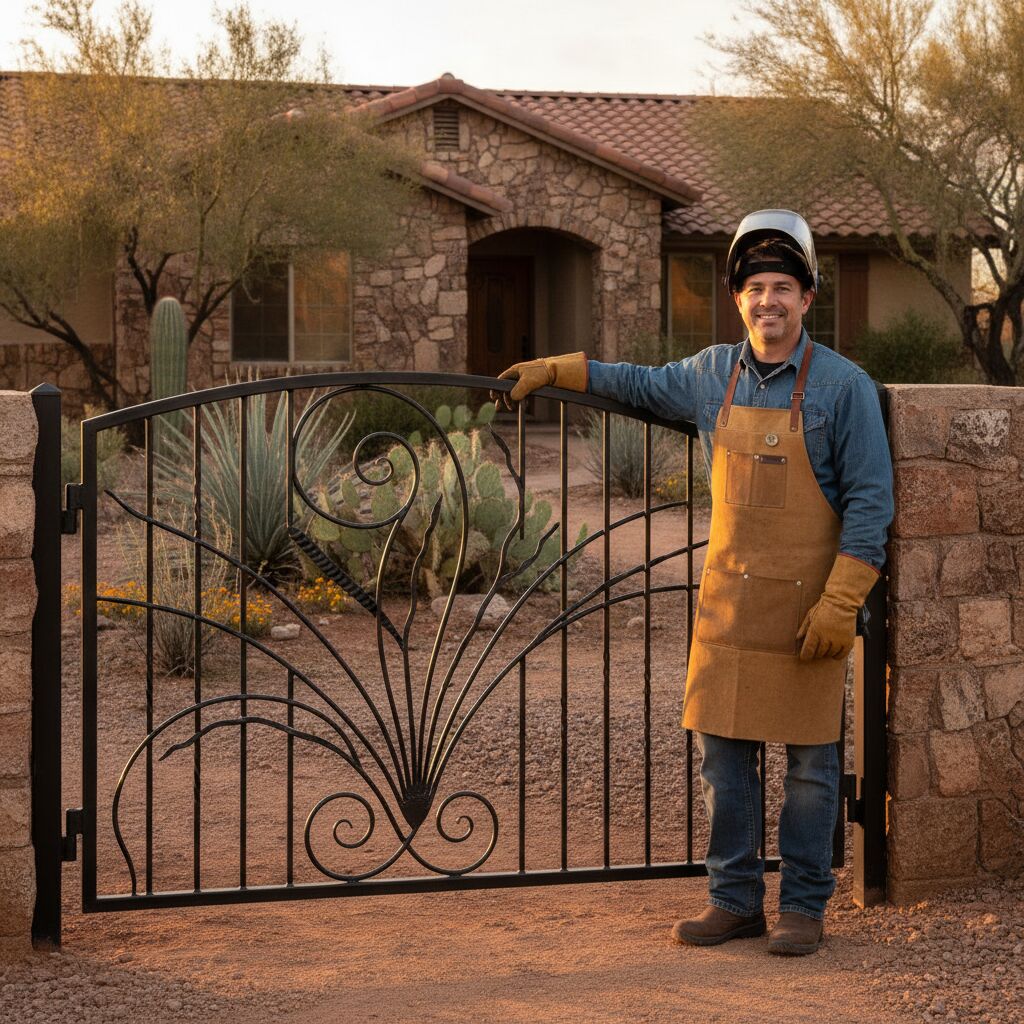
It's one of the most common calls we get from San Tan Valley homeowners: a gate that used to swing and latch without a second thought suddenly drags on the ground, binds halfway through its swing, or refuses to latch at all. The instinct is often to assume the gate is simply old or was installed poorly — but in a huge number of cases, the real explanation is Arizona's climate doing exactly what it does to metal structures across the desert.
Thermal expansion is a real, physical process
Metal expands when it heats up and contracts as it cools. In a climate where surface temperatures on dark steel can swing dramatically between a summer afternoon and an early morning, that expansion and contraction happens constantly, day after day, year after year. Over time, that repeated movement can work hinge bolts loose, stress weld points at the hinge and frame connections, and shift a gate's alignment within its frame — even when the gate itself is well-built.
Ground and foundation shift compounds the problem
Heat isn't the only factor. Arizona's expansive and often poorly compacted native soils can shift with seasonal moisture changes, and gate posts set in concrete footings aren't immune to that movement. When a post shifts even slightly out of plumb, it changes the geometry of the entire opening — which is why a gate that was installed level can develop a sag or dragging point months or years later without any single dramatic event causing it.
- Hinge wear and loosening. Repeated thermal cycling can loosen hinge hardware and stress the weld points where hinges attach to the post and gate frame.
- Frame racking. A gate frame that isn't perfectly square anymore — even by a small margin — will drag or bind as it swings.
- Post movement. A shifted or settling post throws off the entire opening's geometry, independent of the gate itself.
- Latch misalignment. As the frame or post shifts, the latch and strike plate can drift out of alignment even when the rest of the gate looks fine.
Good to know
A sagging or dragging gate is very often a repair-welding fix, not a full-replacement situation. Re-squaring the frame, reinforcing or replacing worn hinge points, and correcting post alignment can restore proper function without the cost of a brand-new gate — assuming the underlying steel hasn't suffered extensive rust or structural damage.What a repair-welding fix actually involves
Depending on what's causing the issue, a repair visit can involve re-welding or reinforcing hinge attachment points, correcting frame square, resetting or reinforcing a shifted post footing, and realigning the latch and strike hardware. Because these issues often show up together — a shifted post throwing off both hinge alignment and latch engagement at the same time — a proper diagnosis on-site matters more than guessing at a single part to replace.
Dealing with a gate that won't close right? See how we handle hinge, frame, and post repair.
See our repair welding servicesWhen replacement actually makes more sense
Repair welding has limits. If a gate frame has extensive rust-through, if the original fabrication was low-quality to begin with, or if the gate has been patched multiple times already, a full replacement can end up being the more practical long-term choice. We'll give you an honest read on which category your gate falls into rather than pushing a repair that won't hold or a replacement you don't actually need.
Preventing it from happening again
No gate is fully immune to Arizona's heat and ground movement, but design choices — adequate footing depth, properly rated hinge hardware, and a frame built with enough rigidity for the opening size — all reduce how much thermal and ground movement affects a gate over its lifespan. If you're dealing with recurring sag on the same gate, it's worth having us look at whether the original hardware or footing was undersized for the gate and opening.
Quick answers
Why do gates sag or stop closing properly in Arizona?
Arizona's heat causes thermal expansion in metal gates and posts, and ground or foundation shift over time can throw hinges out of alignment. Both are common, fixable repair-welding issues rather than a sign the gate needs to be fully replaced.
Can a sagging gate always be repaired instead of replaced?
In most cases, yes. Hinge, frame, and post repair welding can correct sag and misalignment on a gate that's otherwise structurally sound. A full replacement is usually only necessary when the frame itself has extensive rust-through or structural damage — we'll tell you honestly which situation you're in.
How can I tell if it's a hinge problem or a post problem?
If the gate drags along the ground or scrapes at one specific point in its swing, it's often a hinge or frame issue. If the entire gate leans or the opening itself looks uneven, the post or footing may have shifted. Either way, a mobile visit can diagnose it on-site.
Gate dragging, binding, or not latching?
Call 844-967-5247 or request a free on-site estimate — repair welding can often fix sag and misalignment issues without a full gate replacement.